
From XNA to Steel Cyclone Engine: The Next Chapter Begins
By Jordon McClain, Founder & CEO, Steel Cyclone Studios
🚀 A Huge Milestone for Steel Cyclone Studios!
After years of developing the original Cyclone Game Engine in Microsoft's XNA Framework, I'm excited to finally share the first major milestone of its successor:
Steel Cyclone Engine
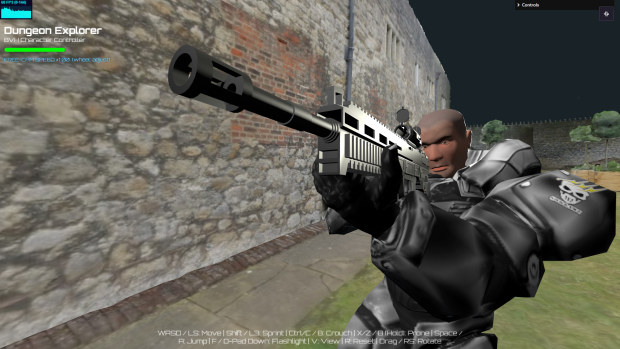
This project represents much more than simply learning another programming language or switching graphics APIs. It's the evolution of everything I've learned over the years—from building games in XNA to creating a modern, browser-native engine capable of powering the next generation of Steel Cyclone Studios games.
If you've followed my development journey over the years, you know how much of my work has been built on the original Cyclone Game Engine. While XNA gave me an incredible foundation as a programmer and game developer, the gaming industry has evolved dramatically since those early days. The browser has become one of the most exciting platforms for game development, and I believe it represents the future of how many indie developers will create and distribute games. (Steel Cyclone Studios)
Looking Back at the Original Cyclone Game Engine
The original Cyclone Game Engine was built using Microsoft's XNA Framework.
Like many indie developers, XNA introduced me to:
Component-based programming
Game loops
SpriteBatch rendering
3D graphics
Content pipelines
Collision systems
Cameras
Physics
Audio
Animation
It was an amazing framework that allowed countless independent developers to publish Xbox Live Indie Games and Windows titles.
But eventually Microsoft discontinued XNA.
Although projects like MonoGame helped keep XNA alive, I wanted to do something different.
Instead of rebuilding another desktop engine...
I wanted to build something that anyone could access instantly.
Why Move to the Browser?
This question has come up quite a bit.
"Why leave XNA?"
The answer isn't because XNA was bad.
It's because browsers have become incredibly powerful.
Modern browsers now support technologies like:
WebGL
JavaScript
Three.js
WebGPU (future)
Gamepad API
Web Audio
Pointer Lock
Progressive Web Apps
Combined together, these technologies create opportunities that simply didn't exist when I first started building games.
The browser has become a universal gaming platform.
Play Instantly — No Downloads Required
One of the biggest advantages is accessibility.
Instead of asking players to:
Download installers
Wait for updates
Install dependencies
Manage storage space
Players simply click a link and begin playing.
No installation.
No waiting.
No worrying whether their operating system is supported.
If they have a modern browser...
They're ready to play.
For indie developers trying to grow an audience, removing that friction is incredibly valuable. (Steel Cyclone Studios)
Cross-Platform by Design
One thing I always struggled with in desktop development was platform compatibility.
Different operating systems...
Different graphics drivers...
Different builds...
Different deployment pipelines.
With Steel Cyclone Engine, the browser becomes the platform.
That means games can run across:
Windows
macOS
Linux
Chromebooks
Android
iPhone
iPad
Tablets
Many handheld devices
Smart TVs with modern browsers
Instead of maintaining multiple native builds, I can focus on improving one engine that reaches players almost everywhere.
Easier Self-Publishing
Another reason for moving to the web is publishing.
One of my long-term goals has always been making my games as accessible as possible.
Web games are much easier to self-publish through platforms such as:
CyberForge Arcade
GameMonetize
CrazyGames
GitHub Pages
My own Steel Cyclone Studios website
Instead of packaging installers for every operating system, updates can be deployed immediately, allowing players to jump into the latest version with nothing more than a browser refresh.
For a solo indie developer, that dramatically simplifies development and maintenance.
Updates Become Instant
Remember downloading a multi-gigabyte patch?
With browser games...
That largely disappears.
When I fix bugs or add new features to Steel Cyclone Engine, everyone automatically receives the newest version the next time they launch the game.
No manual patching.
No outdated versions.
No fragmented player base.
This makes rapid iteration much easier during development and helps players always experience the latest improvements. (Steel Cyclone Studios)
Built-In Multi-Controller Support
Steel Cyclone Engine is also being designed with flexible input in mind.
Rather than targeting a single console or operating system, the goal is to support a wide variety of controllers through the browser, including:
Xbox controllers
Xbox 360 controllers
Xbox Series controllers
PlayStation controllers
Keyboard & mouse
Mobile touch controls
Because modern browsers expose standardized controller APIs, input handling becomes much more consistent across platforms than it was in the early XNA days.
Bringing My XNA Projects Forward
One of my biggest goals isn't to leave my XNA work behind.
It's to preserve it.
Over the years I've built:
Starter kits
Sample projects
Game prototypes
Editors
Learning resources
Tools
Rather than letting those ideas remain locked inside an older framework, I want to bring them into the future.
The plan is to recreate and improve those projects as web-based versions using Steel Cyclone Engine.
That includes many of the reusable systems I developed over the years while expanding them with modern features and workflows.
First Major Milestone
Although Steel Cyclone Engine is still in active development, reaching this first milestone has been incredibly rewarding.
Current features include:
✅ Browser-based editor
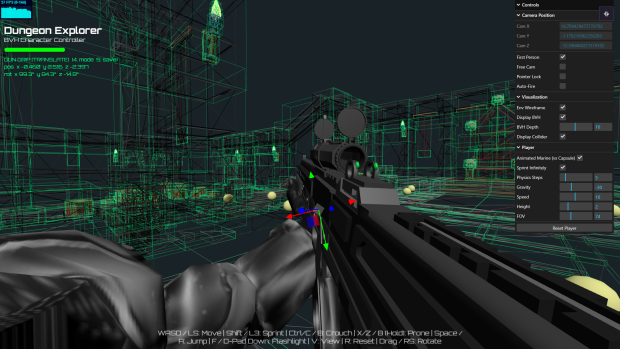
✅ Custom BVH character controller
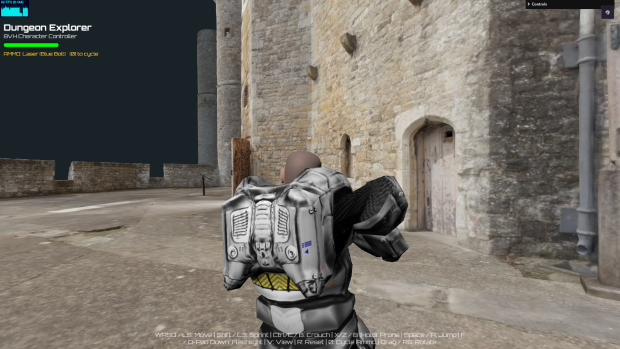
✅ Modern physics and collision
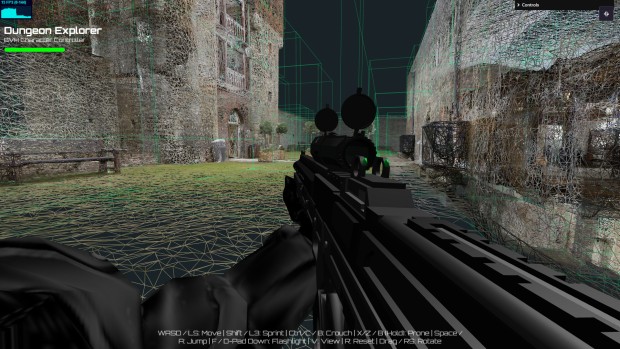
✅ First- and third-person gameplay
✅ Animation blending & Mixing
✅ Weapon attachment system
✅ Environment editing tools
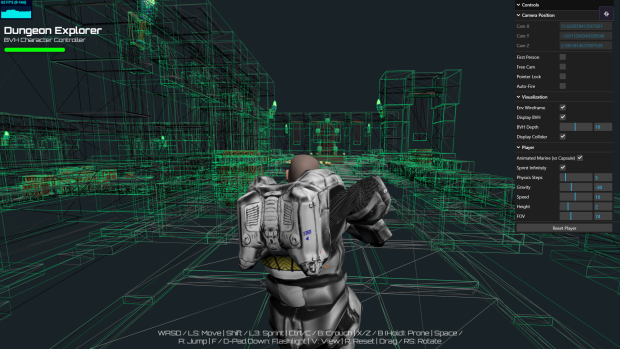
✅ Cross-platform deployment
Every one of these systems becomes a reusable building block for future projects.
Acknowledging the Community
During early prototyping, I also want to recognize two developers whose work has been valuable during development.
Garrett Johnson's Player Movement sample and BVH implementation provided an excellent reference for understanding efficient character navigation and collision techniques in Three.js.
I'd also like to thank David Fletcher for creating the photogrammetry model of Upnor Castle, which has served as a fantastic environment for testing movement, rendering, and collision systems.
Both are used strictly for demonstration and development purposes while I continue creating original environments and gameplay systems for Steel Cyclone Engine.
The Long-Term Vision
Steel Cyclone Engine isn't being built for a single game.
It's being built as the foundation for nearly every future Steel Cyclone Studios project.
That includes titles like:
Superstar McClain
and many more original games.
As the engine improves, every project built on top of it benefits from those improvements.
Instead of reinventing systems for each game, I can focus on building new gameplay experiences while continuing to strengthen the engine underneath them.
Looking Ahead
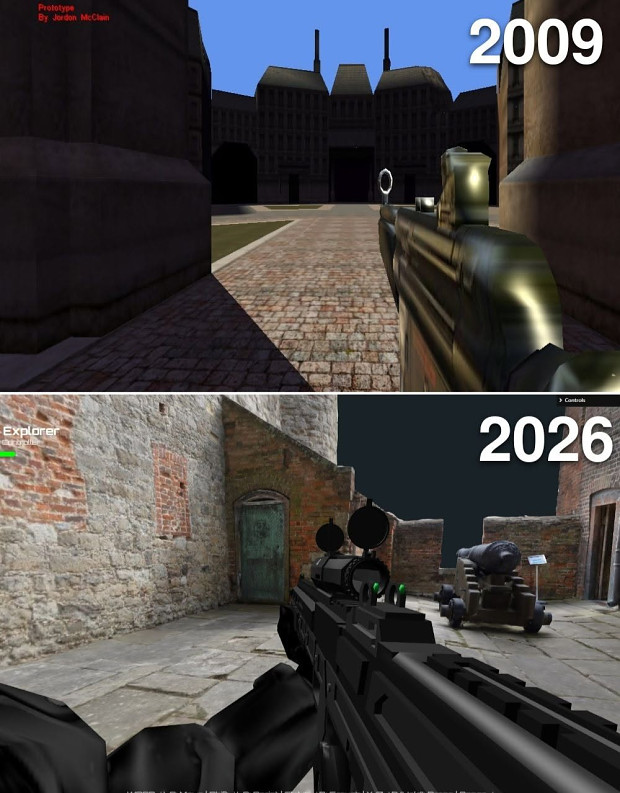
Leaving XNA behind is bittersweet.
It played a huge role in shaping who I am as a programmer and game developer.
But every technology has its season.
Steel Cyclone Engine represents the next chapter—not by replacing everything I learned from XNA, but by building upon it.
The lessons from the original Cyclone Game Engine are still here.
They're simply evolving into something designed for today's web and tomorrow's games.
I'm excited to continue sharing development updates, engine improvements, and behind-the-scenes looks as this project grows.
Thank you to everyone who has supported Steel Cyclone Studios throughout this journey. I can't wait to show you what's coming next.
Here's to the next generation of the Cyclone Game Engine. Welcome to Steel Cyclone Engine.

HARGATOTO merupakan situs toto
ReplyDeletegerbang utama menuju situs toto slot gacor 4D dan toto togel slot88 terlengkap dengan akses praktis, permainan populer, serta fitur sakti yang dijamin jackpot.